
When Chris Kempczinski became the chief executive of McDonald’s in 2019, he stepped into a company with decades of success built on a familiar formula—serve popular menu items, expand restaurants globally, and maintain operational efficiency.
But Kempczinski’s leadership has gradually shifted that traditional approach. Instead of focusing only on opening more outlets or launching new burgers, he has pushed the fast-food giant toward a future shaped by technology, digital platforms, and customer data. Today, many industry observers see McDonald’s evolving into a tech-enabled retail business rather than simply a burger chain.
Chris Kempczinski A Different Background from Previous McDonald’s Leaders
Kempczinski’s career journey helps explain his unique leadership style. Before joining McDonald’s, he built experience at major consumer brands such as Procter & Gamble, PepsiCo, and Kraft Foods.
In those roles, he focused heavily on marketing strategy, brand development, and understanding consumer behaviour. That experience gave him a broader business perspective compared with many previous McDonald’s executives, who typically came from operational restaurant backgrounds.
Kempczinski joined McDonald’s in 2015 as executive vice president responsible for strategy, innovation, and business development. Within a year he became president of McDonald’s U.S. operations, and in November 2019 he was appointed CEO after the departure of Steve Easterbrook.
The Strategy That Is Redefining McDonald’s
After taking over as CEO, Kempczinski introduced a company-wide plan known as “Accelerating the Arches.” The strategy focuses on strengthening McDonald’s most popular menu items while modernising how customers interact with the brand.
Key elements of the plan include expanding mobile ordering, delivery partnerships, digital kiosks, and loyalty programs. Instead of relying mainly on customers visiting restaurants in person, McDonald’s increasingly connects with them through digital platforms and personalised offers.
Industry analysts say this shift represents one of the most significant changes in the company’s business model in decades. Sales are now influenced not just by restaurant traffic but also by activity through the mobile app, delivery services, and targeted promotions.
The Viral Video That Got People Talking
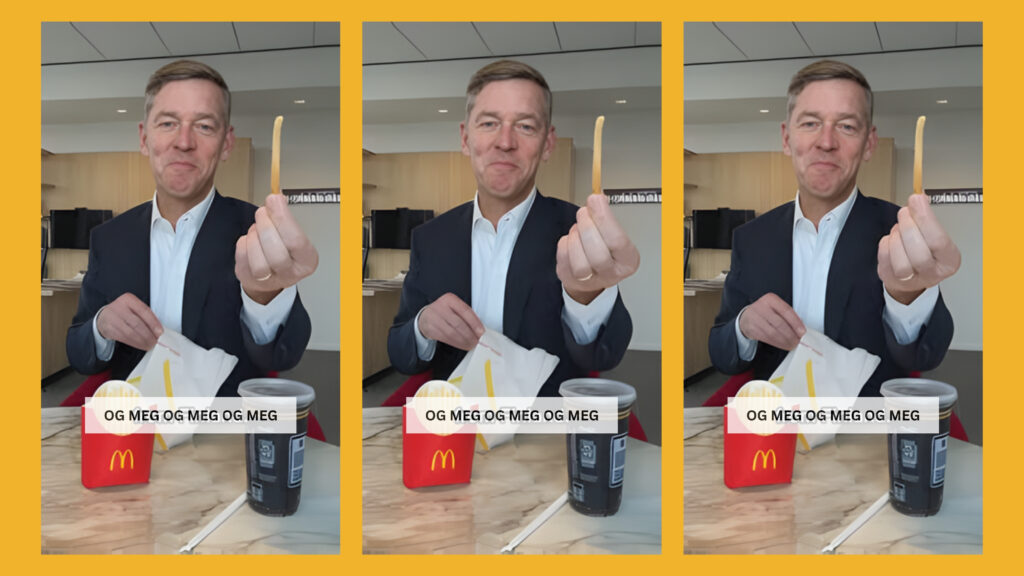
Kempczinski recently attracted attention online after a promotional video featuring him tasting a new McDonald’s burger circulated widely on social media.
In the clip, he refers to the burger as a “product,” a term commonly used in corporate strategy discussions. Some viewers found the phrasing unusual for a fast-food advertisement, where marketing language is usually more energetic and casual.
While the moment sparked light-hearted discussion online, it also reflected Kempczinski’s analytical mindset. His language mirrors the thinking of a business strategist evaluating consumer offerings rather than a traditional restaurant executive simply promoting menu items.
Running McDonald’s as a Modern Consumer Platform
Perhaps the biggest shift under Kempczinski is how the company views its own role in the marketplace. Instead of operating solely as a restaurant chain, Chris Kempczinski McDonald’s increasingly functions as a global consumer platform powered by technology.
The company has invested heavily in digital ordering systems, artificial intelligence tools for drive-through operations, and data analytics designed to improve efficiency and customer experience.
Another key area of growth is the McDonald’s loyalty programme, which connects millions of customers directly to the brand through the mobile app. These programmes allow the company to offer personalised deals while also gaining insights into consumer preferences.
Chris Kempczinski A More Low-Key Leadership Style
Kempczinski’s approach to leadership also differs from some of his predecessors. Earlier McDonald’s CEOs often appeared frequently in interviews and marketing campaigns. Kempczinski, by contrast, tends to maintain a relatively low public profile.
He focuses more on internal management and long-term strategy, communicating with employees and franchise partners rather than seeking media attention. Supporters say this quieter style reflects the complex challenges faced by large global companies today.
Leading Through a Rapidly Changing Industry : Chris Kempczinski
Kempczinski’s time as CEO has coincided with major shifts in the global restaurant industry. The COVID-19 pandemic accelerated trends such as digital ordering, drive-through service, and delivery platforms. At the same time, rising costs and inflation have forced many food chains to rethink pricing and operations.
Under Kempczinski’s leadership, McDonald’s expanded its digital capabilities and adapted quickly to these changes. The company’s strong performance in recent years suggests that its technology-focused strategy has helped it stay competitive in a rapidly evolving market.
A New Type of Fast-Food Leadership
Kempczinski may not match the traditional image of a fast-food executive, but that difference is part of what defines his leadership. His focus goes beyond menu items and restaurant expansion to include technology, data, and long-term customer relationships.
For a brand that has existed for more than seven decades, this shift could play a crucial role in shaping its future. If the strategy continues to deliver results, McDonald’s may increasingly resemble a modern consumer platform as much as a global fast-food chain.