


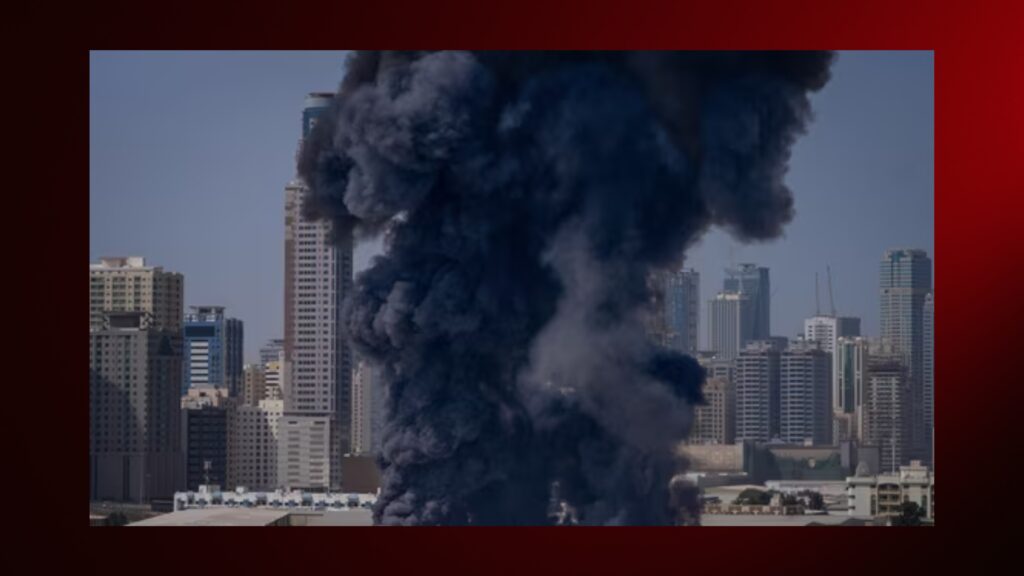
Dubai/Abu Dhabi: Dubai Missile Alert LIVE
A wave of missile and drone threats briefly put the United Arab Emirates on high alert on Sunday before authorities reassured residents that the situation is now safe. Officials confirmed that the earlier warning about a “potential missile threat” had been withdrawn, allowing people in Dubai and Abu Dhabi to resume normal activities.
The alert came as tensions across the Gulf region escalated amid ongoing attacks linked to Iran, which has been launching missile and drone strikes across parts of the Middle East during the widening regional conflict.
Missile Scare in Dubai, Abu Dhabi: UAE Lifts Alert as Gulf Tensions Rise
Sirens, alerts and a brief airport disruption : Dubai Missile Alert LIVE
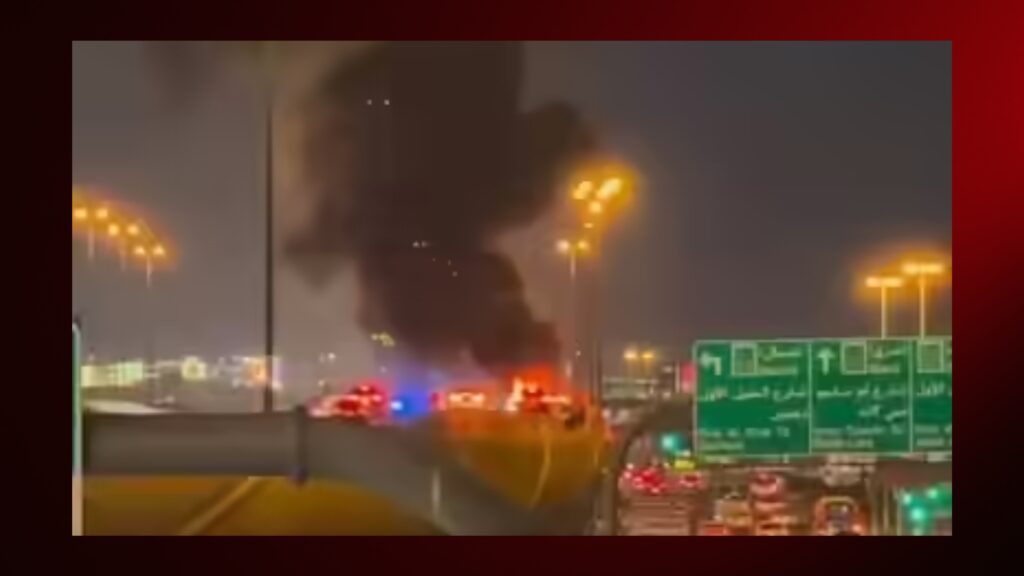
Residents in several parts of the UAE received emergency alerts on their phones warning of a possible missile threat and advising them to move to safe buildings and stay away from windows and open areas.
Authorities said the country’s air defence systems were responding to the threat. At one point, Dubai’s main airport — one of the busiest international travel hubs in the world — briefly halted operations after an unidentified aerial object was intercepted nearby.
Debris from a drone that was shot down reportedly struck the 23 Marina Tower, one of Dubai’s tallest residential buildings. Officials said the debris caused damage but did not trigger a major fire.
In another incident, a Pakistani driver was killed in Dubai’s Al Barsha area after debris from an intercepted projectile fell near him. Authorities confirmed that the UAE’s total death toll from the attacks has risen to four, with over 100 people reported injured.
Gulf countries face wider attacks : Dubai Missile Alert LIVE
The UAE was not the only country affected. Several Gulf nations reported attacks or attempted strikes as the conflict spread across the region.
In Kuwait, fuel tanks at the international airport were targeted in a drone strike, while air defence systems intercepted incoming missiles and drones. Two border guards were killed during the attacks, according to Kuwait’s interior ministry.
Meanwhile, Bahrain reported that an Iranian drone damaged a desalination plant, raising serious concerns about attacks on civilian infrastructure. Desalination plants are critical for drinking water in Gulf countries, which rely heavily on these facilities.
Saudi Arabia also reported intercepting multiple drones near its capital, Riyadh, including one aimed at the city’s diplomatic district.
Qatar issues advisory as flights affected
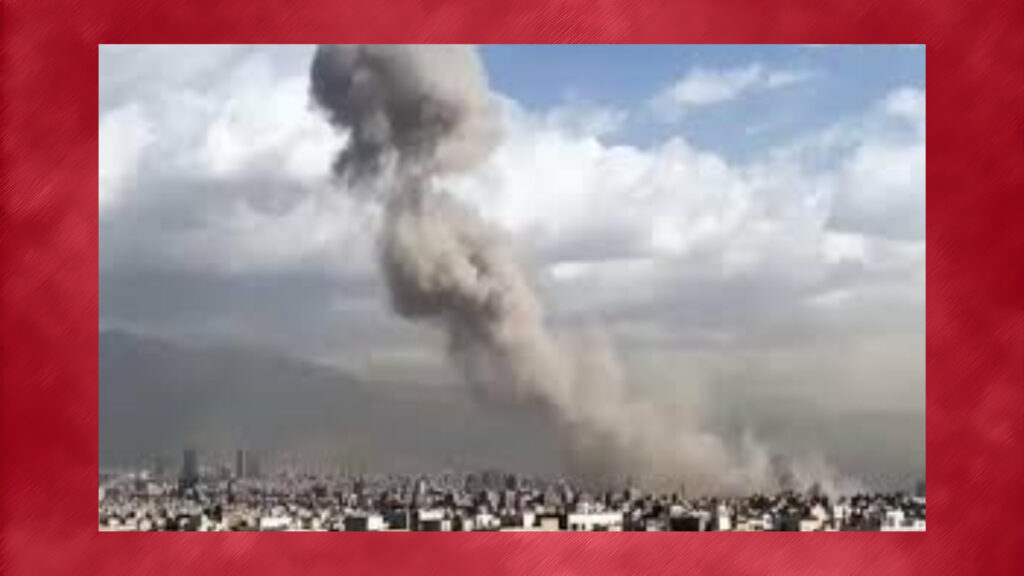
Dubai Missile Alert LIVE
As tensions intensified, Qatar issued a fresh advisory asking residents to follow official instructions and rely only on verified information.
Air travel across the region has also been affected. Qatar Airways said it would operate only limited flights from Doha until airspace conditions stabilize. Several airlines, including Oman Air, announced flight cancellations due to regional airspace restrictions.
The Embassy of India in Doha also issued an advisory urging Indian nationals stranded due to flight cancellations to remain indoors and share their details with the mission.
Wider Middle East conflict: Dubai Missile Alert LIVE
The developments come amid a broader regional conflict involving Israel, Iran and allied groups. The fighting has already spread beyond traditional frontlines, affecting several Middle Eastern countries.
In Lebanon, officials reported nearly 400 people killed in the past week of clashes between Israel and the militant group Hezbollah, including dozens of children.
Iranian President Masoud Pezeshkian warned that Tehran could expand attacks if neighboring countries allow their territories to be used for strikes against Iran.
Dubai Missile Alert LIVE : Situation “currently safe” in the UAE
Dubai Missile Alert LIVE: Despite the tense regional backdrop, UAE authorities emphasized that the immediate threat had passed.
The country’s interior ministry said the missile alert had been lifted and that the situation was “currently safe,” though residents were advised to remain cautious and continue following official guidance.
While daily life in Dubai and Abu Dhabi has largely returned to normal, the latest incidents underline how quickly the broader Middle East conflict can spill over into the Gulf — a region that sits at the heart of global energy supplies and international air travel.
Gulf on Edge: More Details Emerge After Missile Scare in UAE
Dubai Missile Alert LIVE recent missile scare that briefly put the United Arab Emirates on alert has highlighted how rapidly tensions in the Middle East are spilling into the Gulf region. While authorities have since confirmed that the situation is currently safe, the sequence of events that unfolded across several countries shows just how tense the security environment has become.
Dubai Missile Alert LIVE : How the alert unfolded in Dubai and Abu Dhabi
Residents across Dubai and Abu Dhabi first received emergency notifications on their phones warning of a “potential missile threat.” The alert instructed people to immediately move to the nearest secure building, avoid windows and open areas, and wait for further instructions from authorities.
Soon after the warning, air defence systems in the UAE were activated to intercept incoming aerial threats. According to officials, at least one drone or missile was intercepted in the skies near Dubai.
Debris from the interception reportedly struck the 23 Marina Tower, a well-known skyscraper in Dubai Marina. The impact caused some structural damage but did not lead to major fires or large-scale destruction.
Authorities later confirmed that debris falling in the Al Barsha area led to the death of a Pakistani driver. The incident pushed the UAE’s confirmed casualty count from the attacks to four, with more than 100 people reported injured across the country.
Temporary disruption at the world’s busiest international airport
The incident also briefly disrupted operations at Dubai International Airport, which is widely considered the busiest airport in the world for international passengers.
Airport authorities temporarily halted flights after an unidentified aerial object was intercepted nearby. The shutdown was short-lived, but it underscored how security concerns can quickly affect global travel routes, especially in a major aviation hub like Dubai.
Attacks spread across the Gulf region :Dubai Missile Alert LIVE
The missile alert in the UAE came amid a broader wave of attacks targeting multiple Gulf countries.
In Kuwait, officials said a drone strike targeted fuel tanks at the country’s international airport. Air defence units responded by intercepting several incoming missiles and drones. During the attacks, two border guards were killed while on duty.
Meanwhile, Bahrain reported that an Iranian drone damaged a desalination plant. The incident has raised serious concerns because desalination facilities are essential for producing drinking water in Gulf countries.
Experts say that if such infrastructure becomes a target, it could pose significant risks to millions of people who rely on these plants for water.
Saudi Arabia and Qatar also take precautions
In Saudi Arabia, defence officials said they intercepted multiple drones near the capital Riyadh, including an attempted strike in the diplomatic quarter.
Dubai Missile Alert LIVE
Meanwhile, authorities in Qatar issued a public advisory urging residents to follow official instructions and rely only on verified sources of information.
Air travel across the region has also been affected. Qatar Airways announced that it would operate only limited flights from Doha until airspace conditions stabilize. Similarly, Oman Air cancelled several flights due to regional airspace closures.
Impact on foreign nationals and travellers
The crisis has also affected many international travellers in the region. The Embassy of India in Doha issued an advisory asking Indian citizens stranded due to flight cancellations to remain indoors and share their details with the mission so assistance can be arranged.
Several airlines have begun organizing repatriation and special flights for stranded passengers, with priority given to families, elderly travellers, and those with urgent medical needs.
Rising tensions behind the attacks
The attacks are widely seen as part of the escalating conflict involving Iran, Israel, and their regional allies.
Iranian President Masoud Pezeshkian warned that Tehran could expand its attacks if neighboring countries allow their territories to be used for strikes against Iran. Meanwhile, Israel has continued its military operations targeting Iranian facilities and allied groups in the region.
The broader conflict has also affected Lebanon, where fighting between Israel and the militant group Hezbollah has killed hundreds of people over the past week.
Situation now under control
Despite the tense regional situation, UAE authorities say the immediate danger has passed. The Ministry of Interior has lifted the earlier safety alert and stated that residents can return to normal activities.
However, officials have advised people to remain alert and continue following official guidance as the broader regional conflict continues to evolve.
For now, life in Dubai and Abu Dhabi has largely returned to normal — but the incident serves as a reminder of how quickly geopolitical tensions can reach even the most stable cities in the Gulf.